
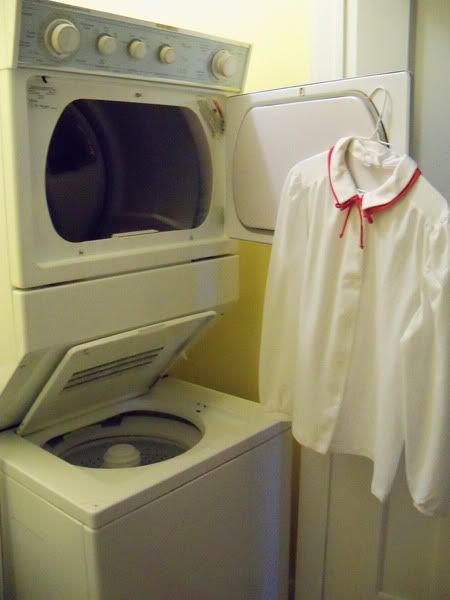
You can find some really unique vintage clothing that will require some extra love. I've written up this guide based off my own experience over the past year in cleaning clothing. I will cover how to hand wash a variety of fabrics, when to dry clean, and taking care of antique/delicate fabric.
What I have in my cleaning arsenal:
- Your choice of liquid detergent that is gentle on fabric integrity and color.
- Laundry bag or lingerie bag to protect delicate fabric.
- Biz Powder
- Plug-able laundry sink or large clean bucket.
- Paint stirring stick or some clean stick.
Dry Cleaning: Sometimes you just have to bite the bullet and realize you have to bring it to the professionals. I recommend this for velvet, silk, Gunne Sax Dresses in good condition, large vintage dresses, coats, wool, and other fabrics specifically marked dry clean only. Also be aware that earlier vintage clothing did not have a care label, in which case you will have to determine to kind of fabric it is.
It should be noted that the difference between vintage & antique is important for dry cleaning. Don't bring anything 20-30s era and earlier to the dry cleaner. Usually garments 50's era and above and still in good shape should be OK. The 40s are middle ground.
The cheapest dry cleaning service available in the U.S. is One Price Cleaners. Look them up on google to see if there's one in your area. They clean any garment for $2.50, which is insanely cheap. I have brought coats, silk, lolita brand, A number of Gunne Sax Dresses, and even velvet bolero with rope-like trimming and I have had no problems. I'd highly recommend them.
How I Handwash: The method I have found to work is handwashing in detergent or biz powder. Fill up your laundry room sink, assuming it's clean, or a large clean bucket with steaming hot water. You can pick up a deep bucket for cheap at Menards/Home Depot for like $2-$3 if you don't have a laundry sink.
Then pour in either biz powder or laundry detergent. Use a clean wood paint mixing stick or any other clean stick to stir it. Once it starts foaming, place the garment into the mixture. Once the water is cool enough to touch, agitate the fabric manually with your hands. I just gently whoosh it around for a couple minutes. Then let it soak for a couple hours, and every so often continuing to agitate the garments. Then drain the water and refill the sink/bucket with water. Agitate again to get out some of the water then empty it. Repeat this until you have washed out all the soap. Depending on the fabric type depends how you should let it dry.
For antique fabrics & trimmings I'd use biz powder not detergent. It is very gentle and will remove stains and yellowing from age. I've cleaned a turn of the century peasant-style cotton blouse and it worked extremely well and did not damage it. When in doubt, use biz. Below I'll talk about different methods for cleaning different fabrics types.
Spot Cleaning Stains on Delicate Fabric: Often you may find stains on clothing, crochet, lace, and other fabrics. Once solution is to make a paste of Biz powder with water and apply it to the problem spot. Let it sit for day or more then rinse. There are other methods you can find as well if you google specifically what fabric and kind of stain you're looking to fix.
Intense Machine or Hand embroidery on clothing + Beading + misc sewn on details: As much as I love 80's ethnic revival and all the machine embroidery and beading, it's a bear to clean. Put it through the washing machine and suddenly you have a fuzzy mass of embroidery. Do not put anything with a tapestry-like web of embroidery or beading in the machine washer, ever. Only small little accents of embroidery & beading can be washed, and they should be put through the machine in laundry bag.
After hand washing, lightly wring the fabric of excess water with your hands. Then let dry in an open air area on a hanger, on a drying wrack. It'll take overnight to dry. You may have to reform and flatten the embroidered fabric. If you want to iron it once it's dried, use a sheet as a barrier between the iron and the clothing. Obviously, do not iron the beaded area of fabric. Use a steamer if it needs it desperately.
Lace: Most lace is fine to wash in the machine in a laundry bag as long as it's not antique.
Antique lace, or any lace you're unsure of it's strength, should be washed similarly to embroidered clothing. Use Biz powder solution and soak overnight, rinse it out with water, and then set it somewhere to dry. Be sure to not fold it to avoid wrinkles.
Please note that biz will whiten, and remove yellow aging. If you like the color of creame/biege on the lace it may not stay. You may want to wash it out with biz and not let it sit and soak, or simply let it air out for a week or a month if you're super attached to the color.
Crochet: Small amounts trimming & accenting on most clothing are OK to wash in the machine in a laundry bag. It will get all crumpled, and you will have to reform it or iron it flat. I would use a sheet barrier for ironing crochet as well.
Antique/vintage crochet collars, strips, table linens, dollies, and other miscellaneous large pieces of croquet you may come across in antique shops and estate sales should only be hand cleaned using biz powder. Spot cleaning may be needed as well. Remember for aged crochet turned biege, biz powder will whiten most of them to an offwhite.
Rayon: Blouse, skirts, and various dress that are rayon can be washed in the washing machine, even though they say dry clean only. The reason it says dry clean only is rayon becomes heavy when wet and more likely to tear. To avoid this, put the garment in a laundry bag or bra bag. Also some rayon fabrics get scratchy when washed, so I'd recommend fabric softener.
I tend to notice that if I put rayon through the dryer, it becomes all wrinkly. So I put the rayon garment in the dryer for a minute or two to just get out the excess water, then I hang it on a hanger, reform it with my hands, and then let it air dry.
For dress and skirts folds and pleats in the fabric maybe lost though. Check the garment to see if they're sewn in. If they aren't it might be best to look get it dry cleaned.
Sweaters: You'll find a lot of vintage sweaters may have a ton of hand knitting and details. These have to be hand washed or they'll get ruined in the washing machine. Use the handwashing method, rinse the sweater to the best of your ability without squeezing/wringing out the water too much. Then to get all the soap out put the sweaters in the machine on the spin cycle and let it wring out all the excess water. You can then rinse the sweater out in water again to make sure you've gotten all the soap out, or simply let it dry. Let it dry flat, preferably on a wire wrack so it can air out. You can stretch it out while it's wet to reform it. If you want the sleeves longer this is the time to do it.
Storing Sweaters and Heavy Fabric Skirts: Heavy sweaters should be folded, not hung on hangers or they will stretch out. Velvet/Velveteen and courdory skirts should be hung on a normal hanger, not pants clasp hanger. Clasp hangers will ruin the fabric.
That's it for now! Do you clean your vintage a different way? Let me know if you have any questions, I'll answer to the best of my ability and experience.

This is very useful! I have some vintage clothes that need special care, I usually take it to the dry cleaners, I only hand-wash it when I find it easy. Thanks for the explanations!
ReplyDeleteThanks for this great guide! I have to say I love rayon and drip-dry blouses, they are so convenient.
ReplyDeleteI have given you the Versatile Blogger award!
http://poupee-sapphira.blogspot.com/2012/02/versatile-blogger.html
Dry cleaning the Vintage clothes is really a tough job as you must know that which type of vintage cloth it is, I mean it is made from fiber or fabric. I recommend Fresh & Clean Dry Cleaning Singapore as these guys are specialized in doing dry cleaning of vintage clothes.
ReplyDeleteThank you for your guidelines, Lindsay! If you have a good collection of fur vintage coats and wool fabrics, it would be absolutely expensive to bring them to the dry cleaning professionals to get them cleaned. Although, if you are not sure about DIY-ing the process, it’s better to leave it to the pro than to risk ruining your fine pieces of clothing. Eleanor @ Peerless
ReplyDeleteExcellent post! I must thank you for this informative read. I hope you will post again soon.
ReplyDeleteKind regard
Heavy Duty Washing Machine Manufacturers
It amazing, I am crazy about this blog and it works. Really its so good and i am very thankful to you. In very informative and useful for me. Thanks for share.
ReplyDeleteJpg Art
Does the embird program allow you to transfer the appliques to the program so that you can manuever the names? I am new to this and the only program I have to the monogram wizard plus.
ReplyDeleteI love this post. Thank you so much for sharing these. It makes me want to be more mindful of the backside of my embroidery . I'm always thinking of ways of covering it up with scrapes of cloth to hide the mess. :)
ReplyDeleteAn interesting dialogue is price comment. I feel that it is best to write more on this matter,
ReplyDeletevacate cleaning melbourne
Your website is really cool and this is a great inspiring article. Thank you so much.
ReplyDeleteDaniel S
Very good friend, this is such a very useful post with nice information.
ReplyDeleteDry Cleaning Service In Dwarka
Dry Cleaning Services In Janak Puri
شركة تنظيف منازل بالاحساء
ReplyDeleteشركة تنظيف فلل بالاحساء-شركة تنظيف مجالس بالاحساء
شركة تنظيف خزانات بالاحساء- شركة تنظيف مساجد بالاحساء
شركة تسليك مجارى بالاحساء
شركة رش مبيدات بالاحساء
شركة مكافحة حشرات بالاحساء-شركة مكافحة النمل الابيض بالاحساء
ReplyDeleteارخص شركة تنظيف منازل بالدمام
تقدمها شركة ركن كلين بالنسبة لتنظيف المجالس بالدمام لايمكن مقارنتها باى حال من الاحوال مع باقى الشركات التى تقوم بتنظيف الكنب والستائر والمجالس بالدمام.
افضل شركة تسليك مجارى بالدمام وليس فقط الارخص فى بل فى جميع اانحاء المناطق حتى فى منطقة الدمام
شركة رش مبيدات بالدمام-شركة مكافحة الحشرات بالدمام
شركة عزل خزانات -بالدمام-شركة تنظيف خزانات بالدمام
شركة تنظيف مساجد بالدمام
شركة تنظيف مسابح بالدمام
شركة تنظيف واجهات حجر بالدمام
ReplyDeleteهل تبحث عن شركة متخصصة فى خدمات التنظيف بالدمام بافضل المعدات والسوائل وثقة تمة فى العمل ودقة فى النتائج كل هذه المميزات توفرها شركة الجنرال الشركة الافضل والامثل فى الخدمات المنزلية بالدمام وبما اننا الشركة الافضل والامثل بدون منافس سوف نسعى لتوفر افضل الخدمات باقل تكلفة وبقدر كبير من الاهتمام والدقة عزيزى اينما كنت فى اى منطقة ا وحى تابع لمدينة الدمام اتصل بنا وسوف نصلك فى الحال شركة االجنرال للخدمات المنزلية
شركة نقل عفش بالدمام
شركة تسليك مجاري بالدمام
شركة مكافحة حشرات بالدمام
شركة تنظيف منازل بالدمام ومجالس وكنب وشقق
شركة مكافحه نمل ابيض بالدمام بافضل المبيدات
شركة تنظيف مجالس وكنب بالدمام بافضل مواد التنظييف
شركة تنظيف خزانات بالدمام مع التعقيم والغسيل
شركة تنظيف سجاد بالدمام بالبخار
شركة تنظيف شقق بالدمام وفلل وقصور
Don’t you ever write like this before? Because it looks like that
ReplyDeleteyou really care about
dry cleaning service
I didn’t want to misconceptualized these things
so I just want to recognize this.
It was a remarkable one! This somehow help me to understand and feed my awareness about Drycleaner because this one is bothering me these past few days.
ReplyDeleteIt was nice to see and read this article of yours! Sometimes It’s hard to accept ideas came from sites because we don’t know if they are telling the truth, I think that your not like that, so I really admire your work! Have you thought about
ReplyDeleteDrycleaner ?
Having some fun time in searching for blogs that somehow caught my attention is the best thing I've done in my leisure time, and I was really interested in topics related to
ReplyDeleteDry cleaner since this really helpful for me.
Do you have any idea about dry cleaning services Singapore? I heard that you have some information about it, hope that I will see it in your post sometime.
ReplyDeleteThere was a moment that my friend told me to have dry cleaning services because she wants me to live with her, but I really don’t have any idea about this such things so I recognized that your works fit in my needs so I thank you so much and God bless you always!
ReplyDeleteI was surprised because you did a great job! This blogs for dry cleaning service can be used as reference for projects or thesis about it.
ReplyDeleteIt was a really good article about dry cleaning service singapore, you are very specific and precise in every detail, I must say that it was a good one.
ReplyDeleteThe article looks magnificent, but it would be beneficial if you can share more about the suchlike subjects in the future. Keep posting. http://cybermondaydeal.website
ReplyDeleteI found this much informative, Very useful for me, as it contains lot of information. thanks
ReplyDeleteWater Softener Services in Dwarka
Water Softener Services in Delhi
EST OVERALL: Rockin' Green hard water laundry additive Natural Laundry Powder | Lavender Mint.
ReplyDeleteBEST BANG FOR THE BUCK: Arm & Hammer Liquid Laundry Detergent Plus OxiClean.
BEST DETERGENT BOOSTER: Charlie's Soap Booster & Hard Water Treatment.
BEST FOR SENSITIVE SKIN: Charlie's Soap Laundry Powder Fragrance Free
Mélangez une tasse de cristaux dans un litre d'eau, imbibez une éponge et frottez les taches. Terminez en rinçant à l'eau claire puis séchez Nettoyage de siège de voiture les sièges avec une serviette éponge ou un sèche-cheveux. Le détergent : très efficace pour les taches d'huile ou de gras, il est à manier avec précaution, en portant des gants.
ReplyDeleteWhat a fantabulous post this has been. Never seen this kind of useful post. I am grateful to you and expect more number of posts like these. Thank you very much.
ReplyDeleteSpecialist Wedding Dress Dry Cleaners
Great tips on cleaning vintage clothing and delicate fabrics! For those in South Carolina looking for top-notch, janitorial services South Carolina offer thorough and reliable cleaning solutions tailored to your needs.
ReplyDeleteThe best laundry and dry cleaning services in Jaipur are conveniently located in various areas: ✓Sitapura, ✓Sanganer, ✓Durgapura, ✓Mansarovar, Gopalpura, ✓Bais Godam, ✓Bapu Nagar, ✓Adarsh Nagar, ✓Kartarpura, ✓Tonk Phatak, ✓Gandhi Nagar, ✓Jaisingpura, ✓Khatipura, ✓Raja Park, and ✓Jawahar Nagar.
ReplyDeleteThank you for sharing these insightful tips on cleaning vintage clothing and delicate fabrics! Maintaining the quality of these pieces is crucial, especially when they hold sentimental value. Speaking of preservation, if anyone in South Carolina needs expert pressure wash services, I highly recommend checking out Pressure Wash Services South Carolina. Their attention to detail and dedication to quality are unmatched. Keep up the great content!
ReplyDeleteGreat guide on cleaning delicate vintage items! For an extra touch, consider using a window cleaning reel to manage delicate laces and crochet pieces. It’s a handy tool for precision and care in all your cleaning tasks.
ReplyDeleteLooking to grow your TikTok presence? You can buy genuine TikTok followers to boost credibility and reach real audiences. Many users also prefer to buy organic TikTok followers for natural engagement and steady growth. If you’re on a budget, you can even buy TikTok followers for cheap without compromising quality. Wondering how do you buy TikTok followers safely? Always choose trusted services that let you buy TikTok real followers for authentic and lasting results.
ReplyDeleteThe specialized golden circle tour Iceland was phenomenal! Flying so close to the newly formed lava fields gave a unique perspective on Iceland’s geology. The helicopter provided a comfortable and safe way to witness the raw power of the volcano. Book this if you can!
ReplyDeleteCompared to physical media like DVDs, magnetic tapes are incredibly vulnerable to heat and moisture. If you value your irreplaceable footage, the most urgent task is getting all those old Tapes to Digital before they're ruined forever.
ReplyDeletePerfrazuoti AI Humanizer Serbian is an innovative tool designed to transform text into more natural, human-like Serbian language. With advanced AI algorithms, it helps writers, translators, and content creators produce fluent, contextually accurate Serbian content. This tool enhances readability, ensures grammatical correctness, and maintains the original meaning while making sentences sound authentic. Perfect for professional communication, academic writing, or digital content, Perfrazuoti AI Humanizer Serbian bridges the gap between automated translation and human-quality Serbian text.
ReplyDelete